Monday, October 30, 2017

Campus Pond - October 25th 2017

Lauren Ho
"Campus Pond Assessment"
Proctor Academy, Andover, NH
Date of Data Collection: October 14th (absent) // October 16 (absent) // October 17th, 2017

Over the past few days, Matilda, Sydney and I were observing, collecting and sampling data from the campus pond that lies in the centre of the Proctor Academy campus. This fieldwork and study that we were doing was the continuation of a ten year study started by the APES class of 2007, and we are collecting the tenth year of data from the same pond, my group specifically, was stationed at site 3. This site is referred to as the "beach" site, because it's a small sandy corner of the pond, although it has now been overgrown and much of the sandy part has been covered by plants.


Diagram by Anna Krajewski

We were looking at the "ABCDEE" (Abiotic, biotic, cycle, diversity, energy, evolution) of the pond. This would help us get a better idea of the health of the pond. One of the biggest aspects of a healthy pond is that it's very diverse in the life and different species that exists in it. We found a fair amount of different species, mostly being Copepod/Zoo plankton, they were very small and often there were too many to count, so we had to make a rough estimate. There were also other creatures such as stonefly nymphs, mayfly nymphs, water boatman flies, water pennies, leeches, and damselfly nymphs.

 Water Boatman Fly Photograph by Matilda Peng

 Turbidity was around 20 JTU, photograph by Matilda Peng

 Mayfly nymph, photograph by Lauren Ho 

 pH levels were always at 6-7, photograph by Matilda Peng

Although I was only there for one of the three data collection days due to personal reasons, what my group and I did (and what they did one the first two days without me) was measure the turbidity, pH, air & water temperature, phosphate levels and dissolved oxygen of the water in our part of the pond. We also looked for any living creatures we found in the water. What we did to do this was first collect all the tools we would be needing, which included a bucket, a large net, an open top container with separate compartments, a species identification sheet, and spoons and water droppers. Alan came along and stopped by with all the other tools we would need to measure the things listed above. We first filled the bucket with pond water, then used the net to stir up the dirt, leaves and other things at the bottom of the pond - back and forth five times - and then we scooped up a big netful and poured it into the bucket of pond water. From there, we used the spoons and our hands to sift through all the things that had come up with the net. We were looking for little creatures from the pond, and they were quite hard to spot and they were mostly black or dark coloured and blended in with the leaves. For this reason, we removed some of the larger leaves and sticks to help us more easily spot the critters. Any biotic creatures we found, we moved over to the separate compartment container and tried to identify them using the species identification sheet and magnifying glass. When we finished all of our data collection at the end of the class, we poured everything and all the creatures back into the pond. We then went back and inputted all of the data we collected into a master data sheet and a shared google document we were all contributors of.

 Bucket of clear water, emptying the net, water with biotic, Photographs by Lauren Ho


We were studying the pond to see whether it was healthy or unhealthy. The health of the pond has a direct relation to us and our life on campus. It plays an instrumental role in the overall health of our campus ecosystem, as well as the Merrimack river watershed, which the outflow leads to. I gained a better understanding of the ecosystem here at Proctor and the diversity of different creatures living specifically in the pond. I also gained a better understanding of how (the methods) to collect biotic and abiotic data, and I learned more about the campus ecosystem health - something very important to myself and all the students at Proctor as we spend most of our time during the school year living and attending class on campus. It's important for us to know about the environment we surround ourselves with.

I really enjoyed this project, because although I unfortunately missed two lessons/days of fieldwork and data collection, I was thankfully able to be present at the third day of data collection, and I had a lot of fun catching and separating the different species and identifying them using the magnifying glass and species identification sheet. I found it a little bit hard to catch up and get right back into things after having missed two classes, but I was grateful that Sydney and Matilda were patient with me and explained to me everything that I needed to know and that was going on. The data collection itself wasn't too hard, but understanding why we needed to know things like the purpose of 'dissolved oxygen' and 'nitrate levels' was confusing for me. Digging and sifting through the leaves and twigs in the pond to location and catch tiny creatures that camouflaged themselves in the leaves was a challenge, but I was patient and had fun doing it, even though it seemed like every time I got my capturing spoon under it, it would swim away incredibly quickly and hide itself somewhere else! I was excited for this project, because I gained a better understanding of the place that I live most of the year, where I spend a lot of time. Being able to know about the health of our ecosystem was really interesting for me. I'm excited for the future to become even more involved with the environment and interact more with it.


Monday, October 2, 2017

Swimming in The Watershed - October 3rd 2017

Lauren Ho
"Swimming in the Watershed "
Pleasant Lake NH // Railway River NH
Date of Excursion: September 26th, 2017

On September 26th, it was an extremely hot and sunny day, we were all sweating bullets on the bus and just standing out in the sun, so we took advantage of the opportunity we got to get into the cool lake and river, while at the same time learning a lot about the bodies of water we were visiting and collected data to compare the two. We studied both the quality of the water and and the creatures that were living there, of which we found quite a few. We unfortunately did not have time to get to our third location.

We left school at 2:05pm sharp on a scorching hot bus to make a 10-15 minute drive to Pleasant Lake in Merrimack County, New Hampshire. Pleasant lake is a 602-acre lake/watershed, which is defined as "an area of ridge of land that separated waters flowing to different rivers, basins or seas". Basically, Pleasant Lake collected water which flowed down from the hills down the slightly inclined banks, and the water from this watershed would flow east to the Blackwater River (tributary of the Contoocook River), then to the Merrimack river and ultimately end up in the sea.

Image result for map of pleasant lake new hampshire
photo by nelsap.org

Here, we took a look at a map and looked at how to read elevation with the thinner and thicker lines, and we looked at the rivers flowing everywhere that looked almost like veins. We went over again "Biomes", "Biospheres", "Community", "Population" and talked about "ecology" (the study of all living and nonliving things in an ecosystem), learned the acronym "ABCDEE" (abiotic, biotic, cycle, diversity, energy, evolution). The quantitative data we collected from this location (and later, the other one as well) included the water temperature, air temperature, Ph, turbidity, and phosphate levels. We also collected some qualitative data such as the weather and location. All the data we collected can be seen in the table below.


As an open body of water with few trees around it, the temperature of the water and the air were quite high. The water was refreshing but still quite warm. The air temperature was so high that we were sweating from just standing out there. It was sunny and the skies were clear, with not many clouds at all. Here we learned to collect the data, using a thermometer. I found the turbidity measuring the most interesting, because it was something I had never heard of or seen before. It is defined as "Turbidity is the cloudiness or haziness of a fluid caused by large numbers of individual particles that are generally invisible to the naked eye, similar to smoke in air. The measurement of turbidity is a key test of water quality." it's measured in JTU, and its measured by collected a measuring cylinder full of water and then it's held over a plastic sheet of paper, then you use your eyes and compare how clear it is to the colors on the side. The images of the turbidity measurements are below. 


photo by Anna Krajewski  (Pleasant Lake)               Photo by Peppy Pettengill (Railway River)

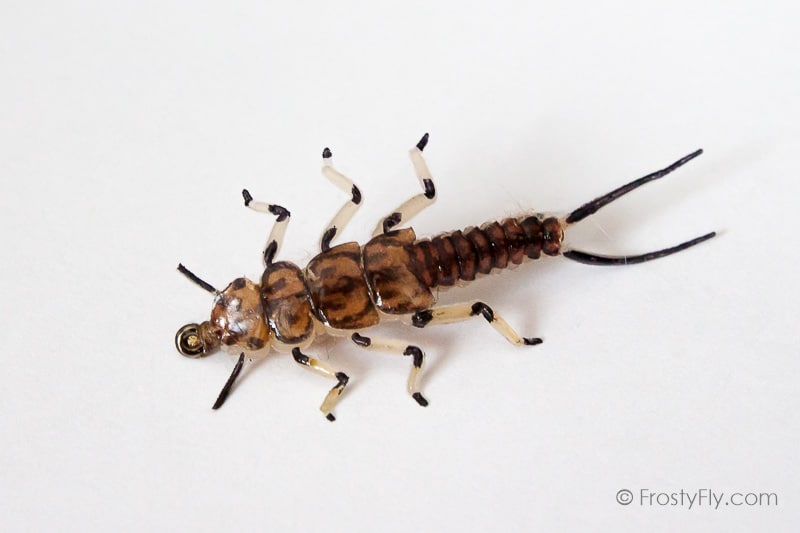
After a refreshing dip in the lake, we hopped back into the bus and drove downstream to the Railway River that runs down Proctor property. The first thing I noticed here was that the water wasn't quite as calm and still as Pleasant Lake. At this location, the water was much shallower and there were a lot more bugs around. With that, though, we were also able to find more living organisms in the water, like the stonefly. This river was much more shaded and covered by trees, so both the air temperature and the water temperature were much lower. The water felt a bit muckier and dirtier, but the tests proved otherwise. The quality of the water, however, was quite similar to that of pleasant lakes (as seen in the table above). Alan said that he could find "one stone fly on every single rock [he] picked up". This meant that stoneflies were very abundant and there was a large population density of them in the area. He also said that "just because we find more creatures in the water here, it doesn't mean there are more creatures here than in pleasant lake. It's all dependent on the area that we're in. We only covered a few meters of area in each body of water.". We pretty much underwent the same process of data collection at this location. Unfortunately, we couldn't stay long, because we had to drive back to school to get to our afternoon activities.

Image result for stonefly
photo by frostfly.com (stone fly)


                                                                                                                      photo by Lauren Ho (railway river) 


photo by Anna Krajewski (rocks the stoneflies were on)

I was really happy that I got this experience. It was my first field trip as a Proctor student! I felt that going out and doing hands on work really helped me learn a lot about the environment around us. I was especially excited about getting the chance to use the different, cool but simple, tools to measure the different aspects that make up the quality of water (thermometer, turbidity, pH etc.). At the same time, not only did I learn about the bodies of water, I also learned about New Hampshire. I followed where we were on the map and I was able to figure out our bearings (not literally!) and see how everything was connected, and where we and the bodies of water were relative to everything else. I was fascinated by the life forms that we found in the lake and the river. It was the first time I had ever seen a stone fly, and we also got to see some fish and a frog that hopped away very quickly on the bank at the railway river. Personally, I wish we could've stayed longer and visited more locations, partially because it was lots of fun, but also to collect more data to compare more different bodies of water in the same region, several of which would be connected. It's unfortunate we had such strict time restrictions. If there was a next time, I'd also try to get into the water, because it was difficult to do this time around for a number of reasons.

APES Photo


Super fancy photo of a lot of trees super close together